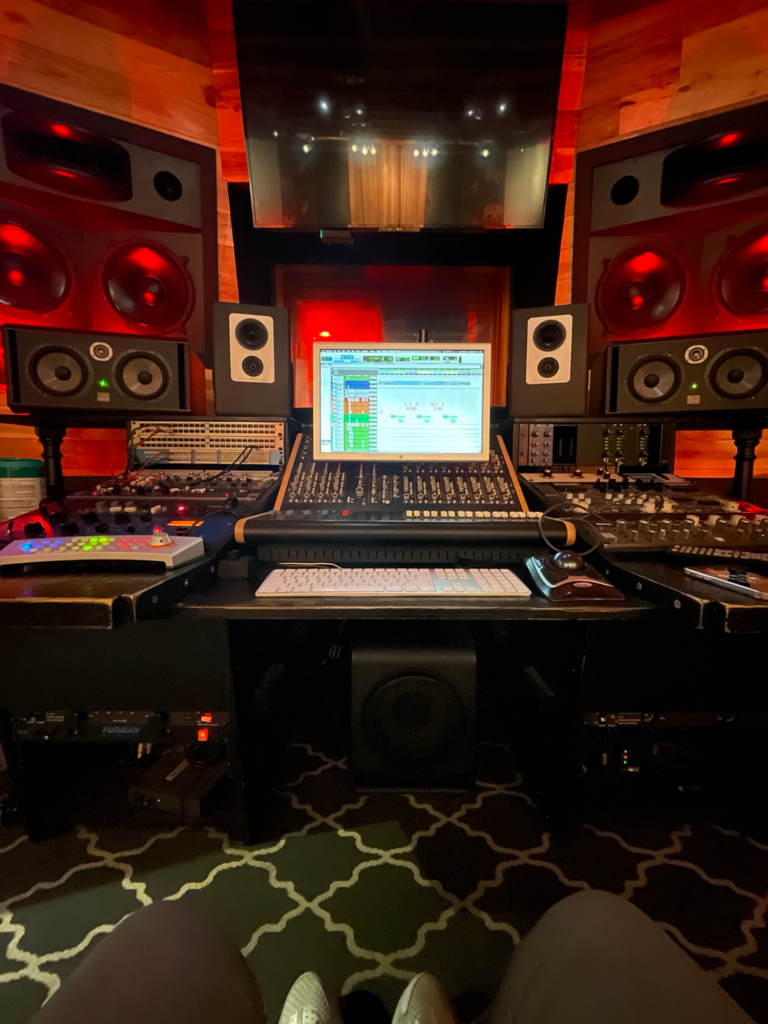
Studio Time, Not Waste Time: Top 5 Mistakes That Burn Your Budget (And How to Fix Them)
Stepping into a professional recording studio for the first time feels like leveling up. Suddenly, you have access to amazing gear and a professional engineer by ready to make your music sound huge.
But here’s the reality check: the clock is always ticking, and it’s usually expensive. Wasting time on rookie mistakes doesn’t just slow you down—it drains your bank account.
To make sure your session is productive and your tracks sound awesome, let’s break down the top five traps artists fall into, and how you can dodge them completely.
🎤 Mistake #1: Showing Up Unprepared
The studio is not a rehearsal room. Every minute you spend trying to remember a lyric, learning a chord change, or arguing about arrangement is money you’re literally flushing down the drain.
The Trap: Thinking you’ll “figure it out in the room” because you’re feeling creative.
⚡️ How to Dodge It: Practice to 110%.
You should know your parts so well you could perform them in your sleep. Don’t just practice the song; practice the specific parts you need to record. If you’re the vocalist, drill those complicated harmonies. If you’re the guitarist, make sure your solo is locked in. Aim for technical perfection before you walk in the door so you can focus on performance and feel once the mic is hot.
⏱️ Mistake #2: Not Having a Clear Game Plan
When you rent a space for six hours, you need an agenda. What are you recording first? Drums? Vocals? Guitar overdubs? If you spend the first hour debating the tracklist or deciding which mic to use, you’ve wasted 16% of your time.
The Trap: Treating the session like a casual hangout instead of a structured project.
⚡️ How to Dodge It: Create an Agenda.
Talk to your bandmates and your engineer (the most important person in the room) days before the session. List everything you need to accomplish and the order of priority.
• Example Plan: 1. Track drums for Song A. 2. Track bass for Song A. 3. Track vocals for Song B.
• Bonus Tip: Always factor in setup and pack-up time (which is usually an hour total).
🚫 Mistake #3: Bringing an Entourage
It’s tempting to invite your whole friend group to hang out and watch the magic happen. They might mean well, but too many people in the control room (or even the lounge) create noise, distractions, and unnecessary tension.
The Trap: Thinking more people equals more support, when it actually equals more chaos.
⚡️ How to Dodge It: Go Small or Go Solo.
Limit the session to only the people who absolutely need to be there—the musicians required for the take, and maybe one producer or director. The engineer needs a quiet, focused environment to listen critically. Save the big listening party for when the track is mixed and ready to drop.
👂 Mistake #4: Underutilizing the Engineer
Many young artists treat the engineer like a human tape machine—someone who just presses “record” and handles the cables. This is a massive mistake. A good engineer is a highly trained expert in acoustics, sound, and mixing. They are part of your creative team.
The Trap: Assuming your ears are the only ones that matter, or being afraid to ask for help.
⚡️ How to Dodge It: Trust Their Expertise.
The engineer’s job is to translate the sound in your head into a professional recording. If they suggest trying a different mic, changing the gain, or moving the amp, listen to them. They hear things you don’t. Be polite, be clear about your vision, and be open to their technical and sonic advice.
🛑 Mistake #5: Trying to Nail “The Perfect Take”
You track the same line 45 times, trying to get every single syllable or string bend exactly right. You start to get tense, your voice fatigues, and you actually get worse with every passing take.
The Trap: Prioritizing robotic precision over a genuine, passionate performance.
⚡️ How to Dodge It: Aim for Feel, Not Flawless.
The beauty of modern recording is that you can punch in and fix small errors later. Focus on capturing the vibe and energy of the performance. If you get a take that has 95% of the right energy but one little mistake, take a quick five-minute break, and then “punch in” (record over) just the broken part. Don’t waste energy re-recording the whole thing again.
The Takeaway
Studio time is a tool—a powerful, expensive tool. By mastering these five simple rules of preparation and focus, you ensure that you leave the session with killer tracks, a lot of knowledge, and a much lighter stress level.